


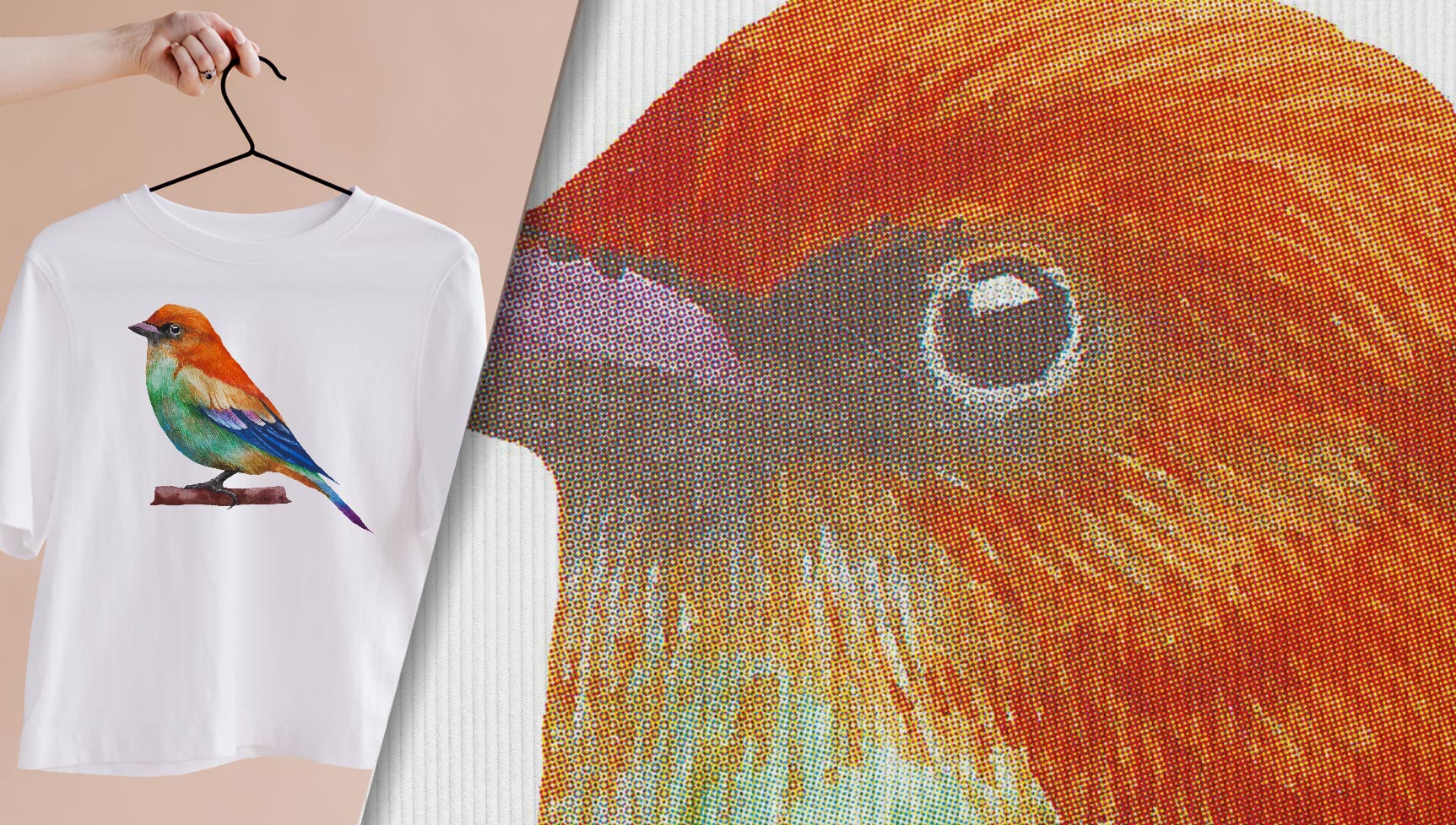
☀️ Learn how to emulsify in screen printing and download the exposure calculator for free.
☀️ Learn how to emulsify in screen printing and download the exposure calculator for free.
Have you experienced issues applying emulsion to a screen for screen printing or struggling to find the right exposure time? Screen printing, an ancient and artisanal marking technique, can present certain challenges. Don't worry, we are here to help you.
In this post, we will explain how to apply the emulsion correctly and how to calculate the optimal exposure time. Keep reading to find out how to achieve it!
ÍNDICE
First of all: screen printing meshes
First, let's talk about the screen printing meshes, the material on which you will apply the emulsion. Screen printing meshes are fabrics with threads that allow ink to pass through. These meshes are mounted on a frame, made of wood or aluminium, and are stretched to print the products.
If you need help to choose the right thread count for your mesh, we recommend reading our post: "Screen Printing Mesh: Learn to Choose the One That Suits You Best". Now, let's focus on the emulsion.
What is an emulsion in screen printing?
The emulsion is a light-sensitive chemical applied to the screen printing mesh. There are many types, and you should choose one depending on the durability you want on the screen and the type of ink you will use.
Its main function is to block the passage of ink through the mesh in the areas exposed to light, while the parts protected by the photolith remain permeable. When the screen is cleaned, the unexposed emulsion dissolves, allowing ink to pass through those areas.
What do I need to emulsify a screen?
To coat a screen for screen printing, remember to work in a dimly lit area or use yellow or red safety lights, as the emulsion is photosensitive and hardens with light. Here is everything you need:
- Fabric-covered screen
The screen with fabric is the foundation of your screen printing work. It must be perfectly degreased, clean and dry for the emulsion to adhere correctly. You can find screens of various sizes and meshes in our shop, along with cleaning accessories such as sponges, soap…
- Emulsion Scoop Coater or Applicator
The squeegee, also known as an emulsion applicator, is an essential tool for applying a uniform layer of emulsion to the screen. Ensure you choose one that is smaller than your screen and has different types of edges to apply more or less emulsion as needed.
- Emulsion
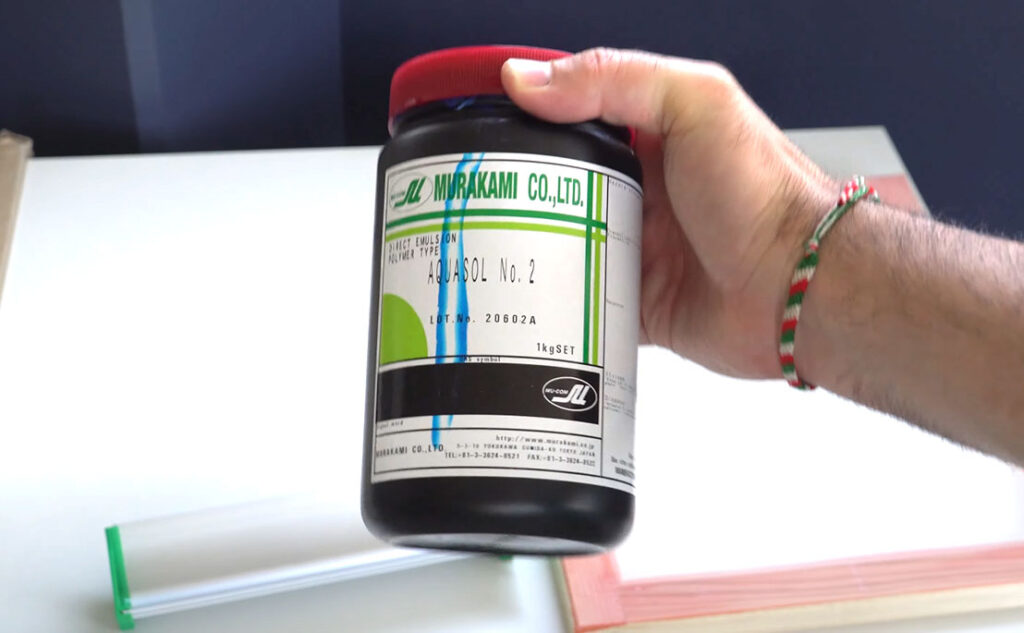
We recommend using high-quality emulsions to ensure the durability and precision of your prints. The Murakami Aquasol is an excellent choice, renowned for its durability and the high quality it provides in every print. Specifically formulated for water-based inks, it is ideal for textile applications. We also offer Murakami emulsion suitable for solvent and UV-curing inks, catering to various printing needs.
Screen Printing Emulsion Process
There are various ways to apply emulsion to a screen, and each professional has their own style. The essential part is to understand the theory and then experiment to find the technique that works best for you to achieve increasingly better results.
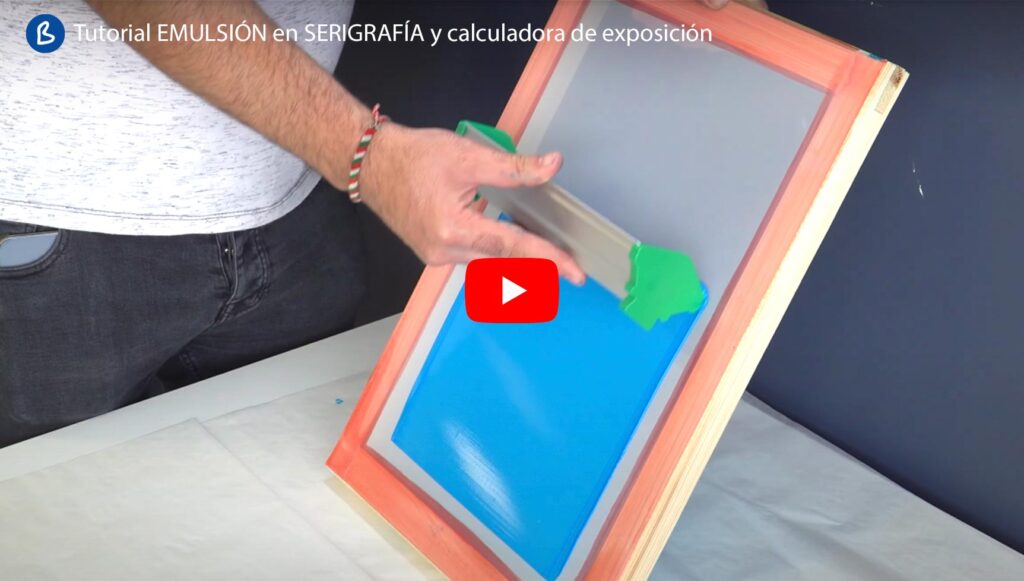
We recommend applying one or two coats of emulsion on each side of the screen, without exceeding this amount. It is crucial that the final coat is always on the inside. This ensures an even application, preventing excess emulsion and guaranteeing a sharper and more precise exposure. Here is a video on how to apply the emulsion with some tips and tricks:
Once the emulsion has been applied, it is important to let it dry in a dark place to prevent premature exposure to light. If you wish to speed up the drying process, you can use a specialised drying oven, ensuring that the temperature and airflow are appropriate. Proper drying ensures that the emulsion adheres correctly to the mesh, preparing it for screen exposure.
Ah! And always remember to clean the squeegee immediately after use and protect its edge for future use.
Adjusting the exposure time of your screen
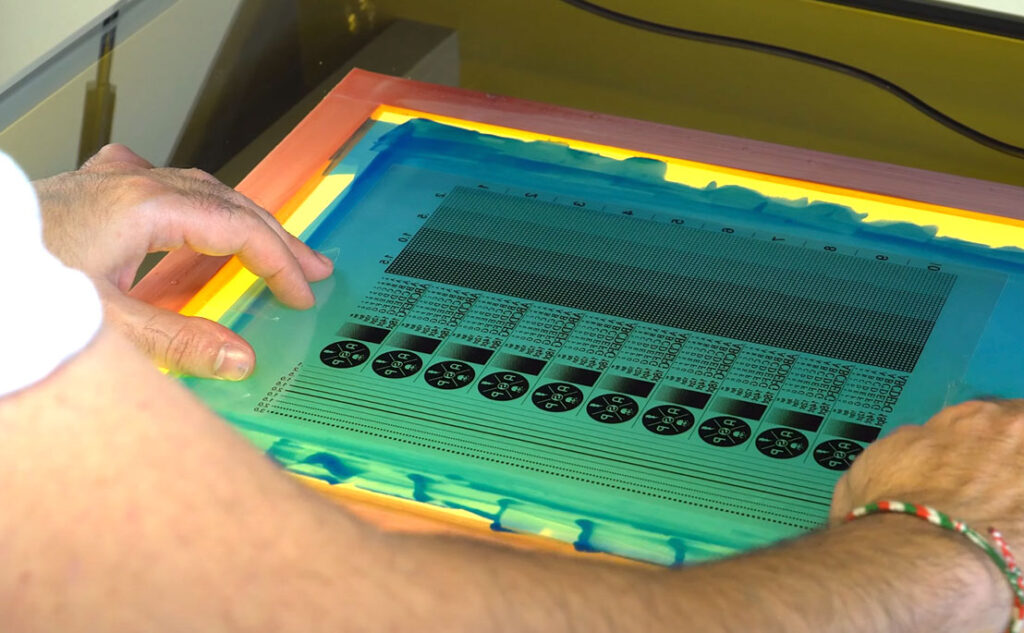
Once you have the screen coated with emulsion, it's time to expose the screen. To determine the correct exposure time in the exposure unit, you will need an exposure calculator.
The exposure time depends on factors such as the emulsion and the power of your lamps. Remember that the time can vary considerably depending on your exposure unit; some require 3 to 4 minutes to achieve correct exposure. Once you have calculated the appropriate time, you will not need to recalculate it unless you change a component.
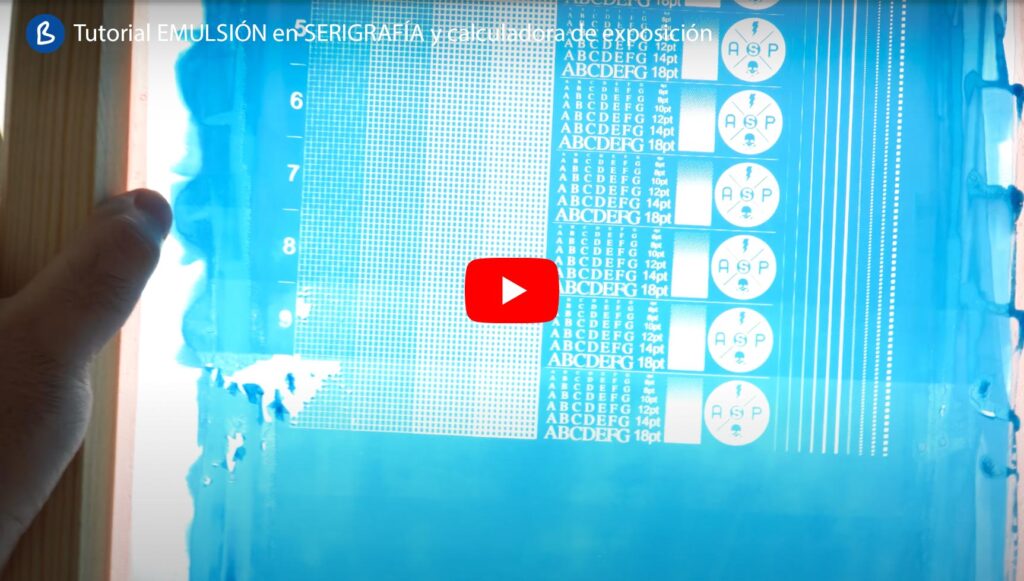
Here is the design of an exposure calculator for you to download and print. The calculator has the same design repeated ten times, allowing you to expose each one for different durations to find the optimal time. We have provided a video for you to learn how to use it:
We hope this post has been helpful to you. Screen printing is an addictive technique that will allow you to create high-quality and durable prints at a very economical cost. Once you start, you won't want to stop!
If you have any questions, share them with us in the comments. Our team will be delighted to provide you with answers and assistance. You can also directly contact our Customer Service department for additional help.
Remember that on our social media platforms, we post a wide range of ideas, offers, and the latest news related to various personalisation techniques daily. To stay updated on everything, make sure to follow us on Instagram and TikTok. And don't forget to subscribe to our YouTube channel to keep learning with us!
See you in the next post!
👇 Other articles that may be of interest to you:
🎨 Four-colour process for screen printing from scratch
Printing photocopies for little money and from your own workshop

Screen Printing: First Steps For Beginners
WE WANT TO KNOW WHAT YOU THINK
You may also like