


🎯 Is it possible to apply DTF on any fabric?
🎯 Is it possible to apply DTF on any fabric?
When we talk about DTF, the question inevitably arises:
Is it suitable for any fabric?
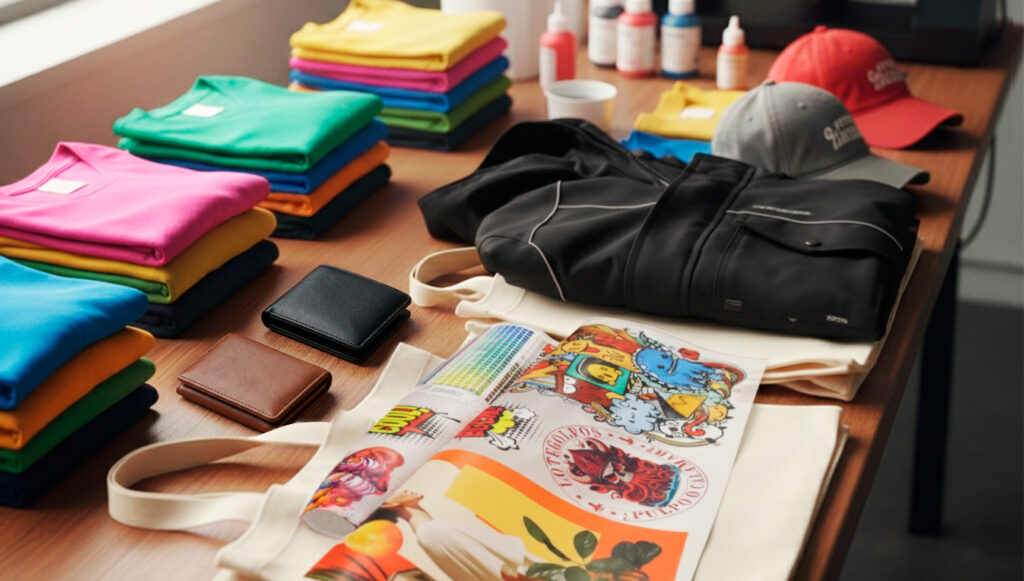
In professional customisation, there is a trend to associate each technique with a specific type of fabric: sublimation for polyester, DTF for cotton, embroidery for certain garments... and so on.
Pero el DTF en textil rompe en gran medida esa lógica. No porque sea universal, sino porque su compatibilidad es mucho más amplia de lo habitual.
Let's see it clearly. 👇
ÍNDICE
- What makes DTF so versatile in textiles?
- Fabrics compatible with DTF
- So, which fabrics are not compatible with DTF?
- Having said that, what should you be clear about regarding DTF in textiles?
- Do you need your own machinery to work with DTF?
- When does it make sense to invest in your own machinery?
- Conclusion
- FAQs about DTF in textiles
What makes DTF so versatile in textiles?
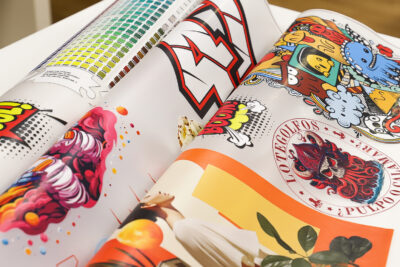
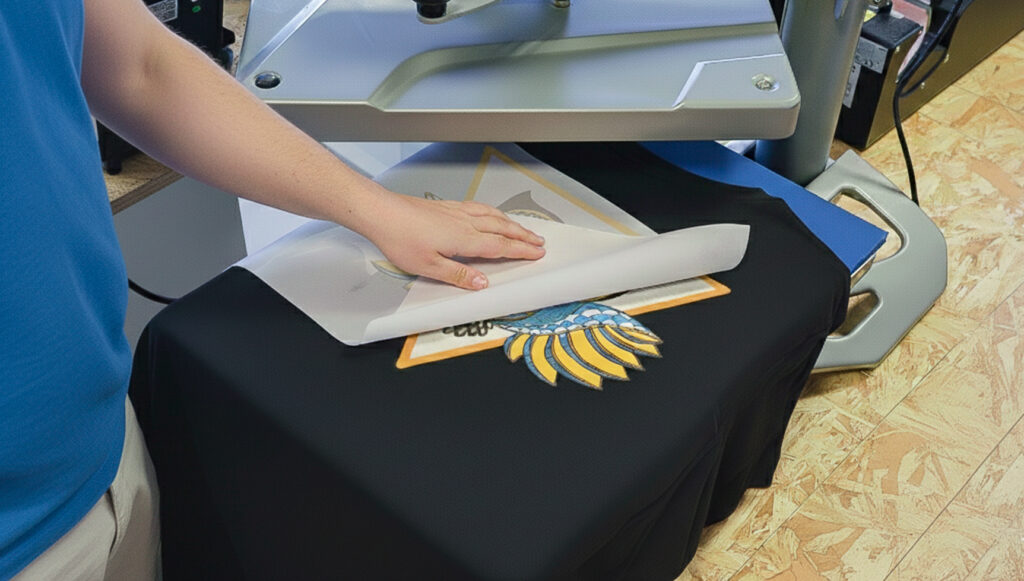
DTF is a customisation technique that involves printing the design onto a special film, applying adhesive powder, and then applying it to the final product using a transfer press.
Unlike other techniques:
👌 It is not highly dependent on fabric composition (unlike sublimation on polyester).
👌 Allows work on both light and dark backgrounds.
👌 Does not restrict the use of white ink in printin.
👌 Applies directly. No pre-treatment required as with DTG.
Fabrics compatible with DTF
Por eso, el DTF en textil destaca por su versatilidad: permite aplicar casi cualquier tipo de diseño sobre una amplia variedad de tejidos:
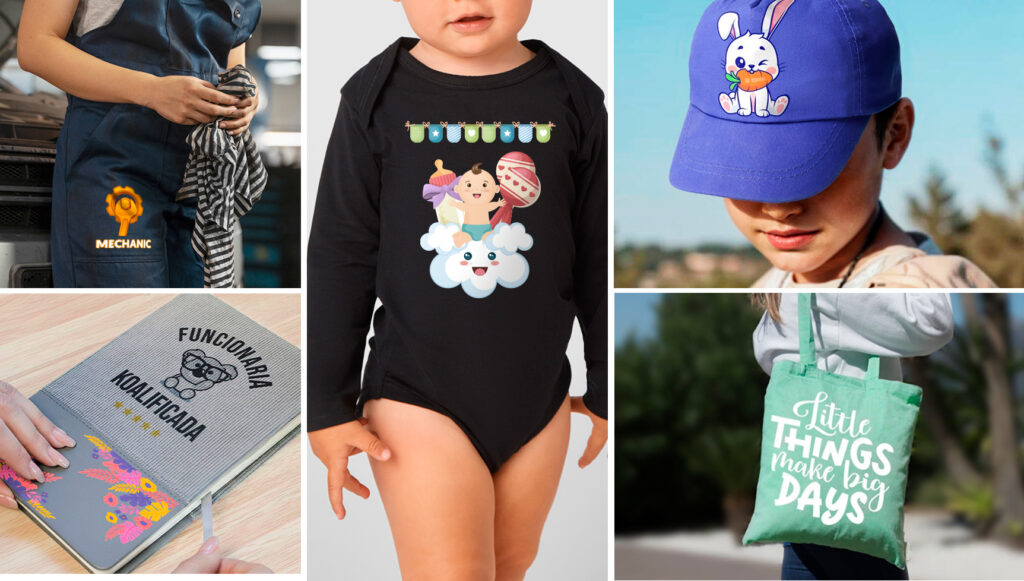
✅ Cotton: t-shirts, sweatshirts, tote bags, and promotional clothing.
✅ Polyester: caps, umbrellas, aprons, white or coloured, as long as they are not water-repellent treated.
✅ Cotton/polyester blends: very common in workwear and technical clothing.
✅ Faux leather: ideal for wallets, notebooks, jewellery boxes… as long as it withstands heat and does not have a non-stick finish.
✅ Denim: jackets, backpacks, trousers...
✅ Softshell: without active water-repellent treatment: as long as it withstands appropriate heat and pressure.
Here is the key point:
A garment may be commercially oriented towards a specific technique (for example, "sublimable"), but that does not mean it cannot be used with DTF.
The important thing is not how the garment is classified, but that it withstands the temperature, the pressure, and does not have treatments that hinder adhesion.
So, which fabrics are not compatible with DTF?
To respond with rigour: not everything goes.
DTF on textiles is not recommended for:
❌ Water-repellent textiles or those with repellent treatments (DWR, stain-resistant).
❌ Garments with waterproof coatings.
❌ Fabrics with a high elastane or spandex content (more than 10%).
❌ Very stretchy fabrics (such as tights or garments made of 100% lycra).
❌ Delicate fabrics sensitive to heat (silk, chiffon, fine lingerie).
❌ Surfaces with a very rough or deep texture (towel, thick corduroy, sherpa, long pile).
❌ Plastic fabrics or those that cannot withstand ironing temperatures.
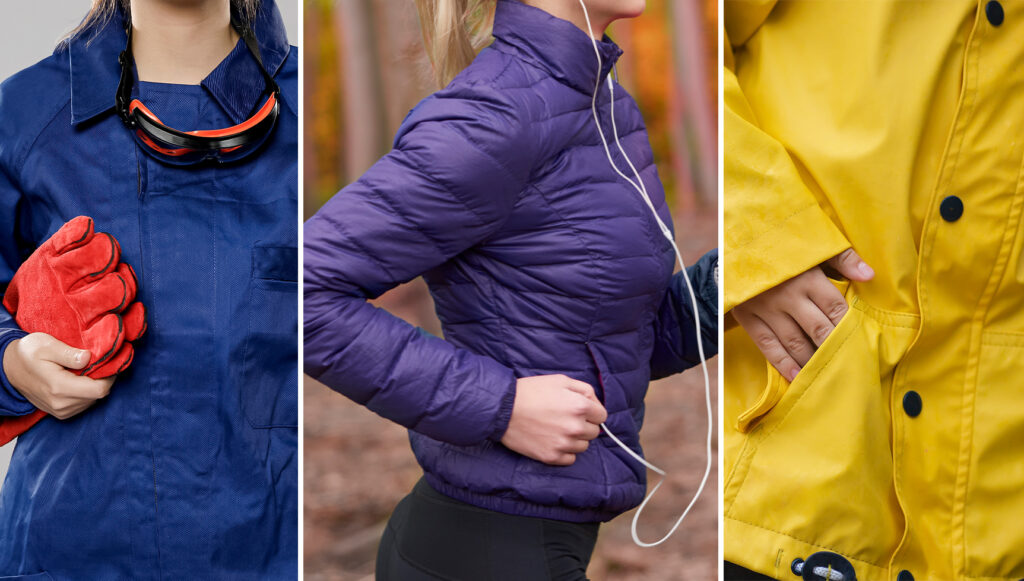
In some fabrics, the issue is chemical or mechanical. Technical finishes such as water-repellent treatments create a barrier that prevents the adhesive from bonding properly, while in very elastic fabrics, the design does not accommodate the stretch and may crack or deform.
In other cases, the issue is thermal or related to contact. Delicate fabrics like silk cannot withstand the heat required for the transfer, and on surfaces with deep texture, the adhesive does not reach all areas, resulting in an uneven bond.
There are also materials that are simply not compatible, such as plastics or non-porous surfaces, where the adhesive does not adhere and heat can damage the material.
👉 Therefore, although the design can be transferred, durability and a professional finish are not guaranteed.
👉 It is always essential to conduct preliminary tests before commencing production.
Having said that, what should you be clear about regarding DTF in textiles?
If we talk about common textiles in professional customisation, the answer is clear:
Sí, en la mayoría de casos puedes trabajar con DTF.
The DTF on textiles works correctly on cotton, polyester, faux leather, and many softshells, provided that the garment:
- Heat support.
- It does not have a water-repellent treatment.
- Allows for even pressure.
- It should not be excessively elastic.
Another important point:
👉 The application temperature is not the same as in other techniques.
If you work with excessively high temperatures, colour migration (blockout) may occur, meaning that the dye from the garment can transfer to the DTF design during printing.
That is why it is essential to conduct preliminary tests before starting production.
Do you need your own machinery to work with DTF?
No. To offer DTF in your business, it is not essential to invest in a printer, oven, or specific equipment from the outset. If you already work with a transfer press, you can start by using our DTF printing service.
The operation is very simple 👇
- You send us the design.
- We print.
- We apply the adhesive powder.
- We perform the curing.
- We send you the transfer ready to iron on.
And what do you need?
👉 Just one transfer sheet.
This allows you to:
✅ Conduct tests without assuming investment.
✅ Validate the market before purchasing machinery.
✅ Handle specific or customised orders.
✅ Expand the catalogue without increasing fixed structure.
✅ Offer DTF even if you don't have a constant volume.
It is particularly interesting when:
👌 You work on demand and not in continuous production.
👌 You are starting with DTF.
👌 You want to test new product lines.
👌 You have occasional demand peaks.
👌 You do not want to undertake technical maintenance.
👌 You do not have space for more machinery.
When does it make sense to invest in your own machinery?
Internalising the process starts to make sense when the DTF stops being a trial and becomes a stable production line.
For example:
- Consistent daily production.
- Medium or long recurring print runs.
- Need for an immediate response without relying on third parties.
- On-site production or customer-facing production.
- On-demand personalisation at events or physical stores.
- Total control over timings, adjustments, and internal tests.
- Cost optimisation when the volume is high and stable.
In that scenario, you will need:
- Impresora DTF con tintas específicas.
- Powder applicator.
- Curing oven.
- Transfer press.
It is a structure designed for businesses with a constant production flow and the technical capacity to handle maintenance and adjustments.
👉 Discover how to get started today with our DTF printing service.

Conclusion
DTF is not limited to a single type of fabric.
Except for garments with water-repellent treatments, waterproof coatings, or high elasticity, most of the textiles commonly used in professional customisation can be processed with this technique by correctly adjusting the parameters.
The important thing is not how the garment is classified, but that it withstands the temperature, the pressure, and does not have treatments that hinder adhesion.
When you understand this, you stop dismissing garments systematically and start evaluating them with technical criteria.
And in practice, this means expanding the catalogue, making the most of more references, and creating new opportunities without changing the business model.
FAQs about DTF in textiles
Does DTF on textiles work on cotton?Yes. It is fully compatible and allows for the application of coloured designs on both light and dark garments without relying on the background.
Can DTF be applied to polyester?Yes, as long as it does not have a water-repellent treatment or waterproof coating. The issue is not the fibre itself, but the finishes that hinder adhesion.
Does it work on softshell or denim (jeans)?Yes. It can be applied to both as long as the garment does not have an active repellent treatment and can withstand the appropriate ironing temperature and pressure.
Which fabrics are not compatible with DTF?Primarily water-repellent textiles, those with waterproof coatings, or highly elastic fabrics such as garments made of 100% Lycra. In these cases, adhesion may be compromised.
Why can very elastic fabrics cause problems?Because when the garment stretches, the adhesive may lose stability, and the design can crack or become distorted. DTF requires a stable surface to maintain durability.
Is it important to adjust the temperature in DTF?Yes, it is essential. Working with incorrect temperatures can cause colour migration (blockout) and alter whites or light tones in the design. You should always adjust parameters and conduct preliminary tests before starting production.
Do I need my own machinery to work with DTF on textiles?No. You can now use a DTF printing service and apply the design with a transfer press, without the need to invest in specific machinery from the start.
If you have any questions, share them with us in the comments. Our team will be delighted to provide you with answers and assistance. You can also contact our Customer Service department directly for additional help.
Remember that on our social media, we post a great deal of ideas, offers, and the latest news related to various personalisation techniques daily. To stay updated on everything, follow us on Instagram and TikTok. And don't forget to subscribe to our YouTube channel to continue learning with us!
👇 Other articles that may be of interest to you:
🙋♂️How to store DTF prints and maximize their durability
♻️ Can DTF film be reused? Yes, you can sublimate it.
🧽 Remove textile vinyl and DTF from your garments in just 3 steps
🆕 xTool Apparel Printer enters the DTF world: Does it surpass current printers?
WE WANT TO KNOW WHAT YOU THINK
You may also like