


🔥 What type of laser do you really need for your business?
🔥 What type of laser do you really need for your business?
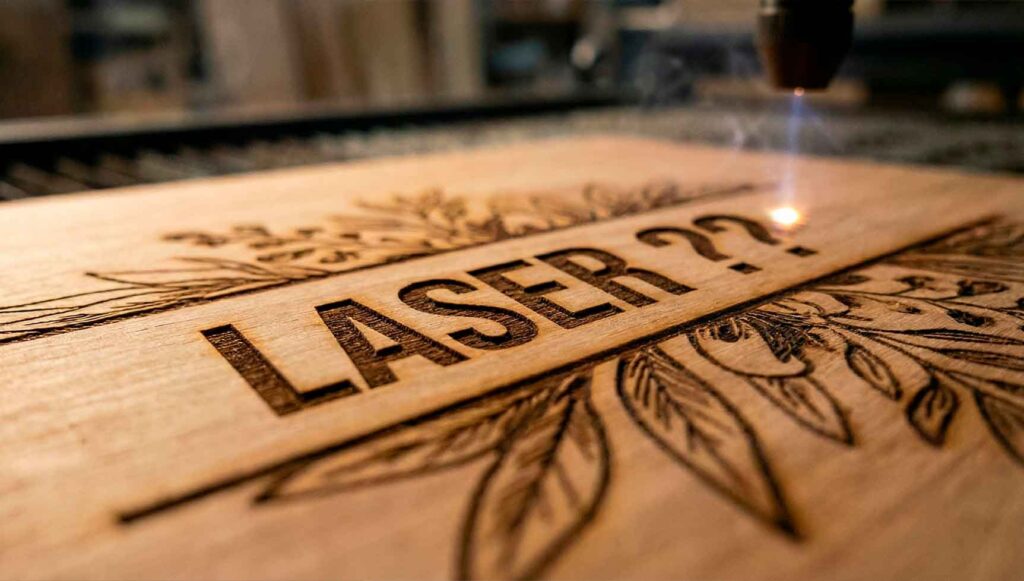
If you are considering starting in the world of laser personalisation, there is a key question you need to answer before purchasing anything:
What type of laser is best for you?
Because no, not all laser machines are suitable for the same tasks. And this is more common than it seems.
In this guide, we clearly explain the main types of lasers, how they differ, and which one best suits your business.
ÍNDICE
- 🧠 Types of lasers: why choosing the right one is so important
- DIODE LASER: The Gateway to Customisation
- CO2 LASER: the most versatile for starting a business
- INFRARED LASER (IR): when you need precision
- FIBRE LASER: essential if you work with metal
- UV LASER: for delicate materials and premium finishes
- Materials according to laser type
- More information about the Sublimable Satin Neck Pillowcase and Filling
- ❓ FAQs about types of lasers
- 🔥 Conclusion: which laser to choose without making a mistake
🧠 Types of lasers: why choosing the right one is so important
When we talk about laser, many people only think about power. However, the most important aspect is actually the type of laser source.
This is what determines:
- What materials can you work with?
- What products can you offer?
- The quality of the finish
- The production speed
👉 You can have a very powerful machine, but if the type of laser is not suitable, you will not achieve the desired result.
Therefore, before comparing models, you need to thoroughly understand the different types of lasers.
DIODE LASER: The Gateway to Customisation
The diode laser is often the first step for beginners in engraving and cutting with laser machines.
It is compact, easy to use, and requires a low initial investment, making it ideal for validating a business idea or starting gradually.
👉 Works by applying direct heat to the material, allowing for easy and accessible engraving and cutting of organic materials.
What can you do with a diode laser?
Common materials:
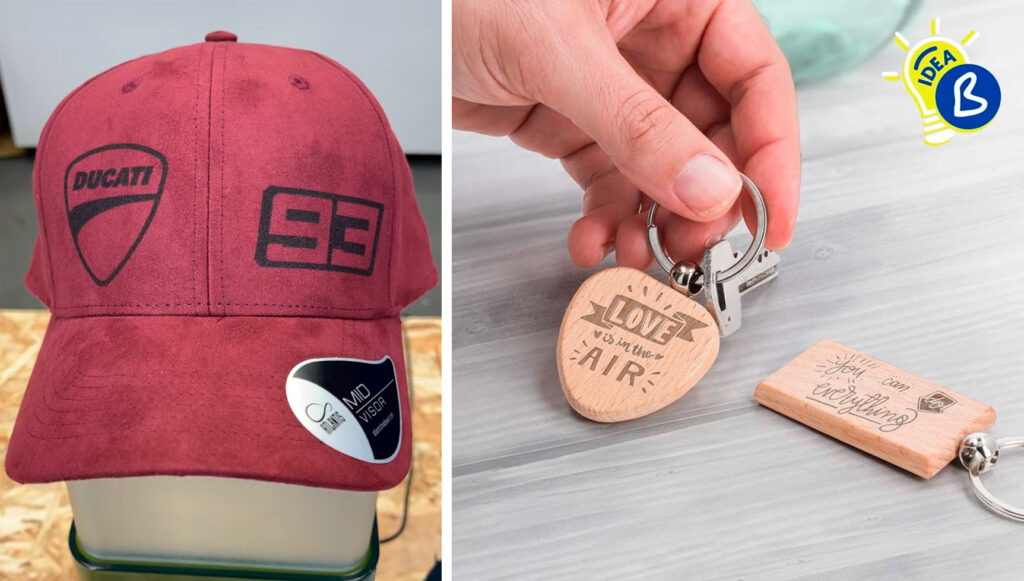
- Wood (MDF, bamboo, pine…)
- Leather, denim, fabrics
- Cardboard and paper
- Blackboard
- Some dark acrylics
Typical products:
- Wooden keychains and plaques
- Custom packaging
- Engraved details
Advantages
- Low initial investment
- Easy to use
- Low maintenance
❌ Limitations
- It neither cuts nor engraves transparent acrylic.
- Limited cutting on thick materials
- Lower production speed
👉 If you are looking for an affordable and versatile option to start engraving and cutting basic materials, the diode laser is your entry point.

CO2 LASER: the most versatile for starting a business
The CO2 laser is the standard within the personalization sector. If you are looking to set up a business with a wide catalogue, this is the most commonly used type of laser.
What makes it different?
Unlike the diode, the CO2 laser can indeed work with key materials such as transparent acrylic, which opens up many more product options.
What can you do with a CO2 laser?
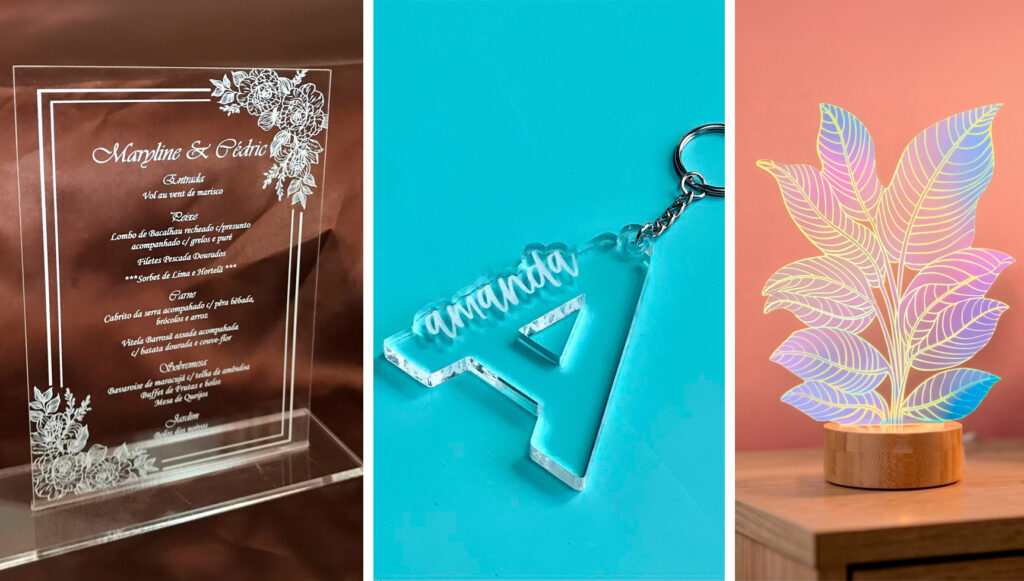
- Cutting and engraving acrylic (including transparent)
- Cutting and engraving wood
- Glass engraving
- Engrave rubber and some textiles
This allows you to sell:
- Letters and signage
- Personalised decoration
- Acrylic sheets
- Rubber stamps
Advantages
- High versatility
- Good balance between quality and speed
- Extensive catalogue of possible products
❌ Things to Keep in Mind
- Greater investment than a diode
- Need for fume extraction
👉 If you want to set up a complete business with a variety of products, the CO₂ laser is the most balanced option.

INFRARED LASER (IR): when you need precision
The infrared (IR) laser is not designed for cutting, but for high-precision marking.
👉 It acts with controlled heat on the surface, allowing for precise marking without working in depth.
What is infrared laser used for?
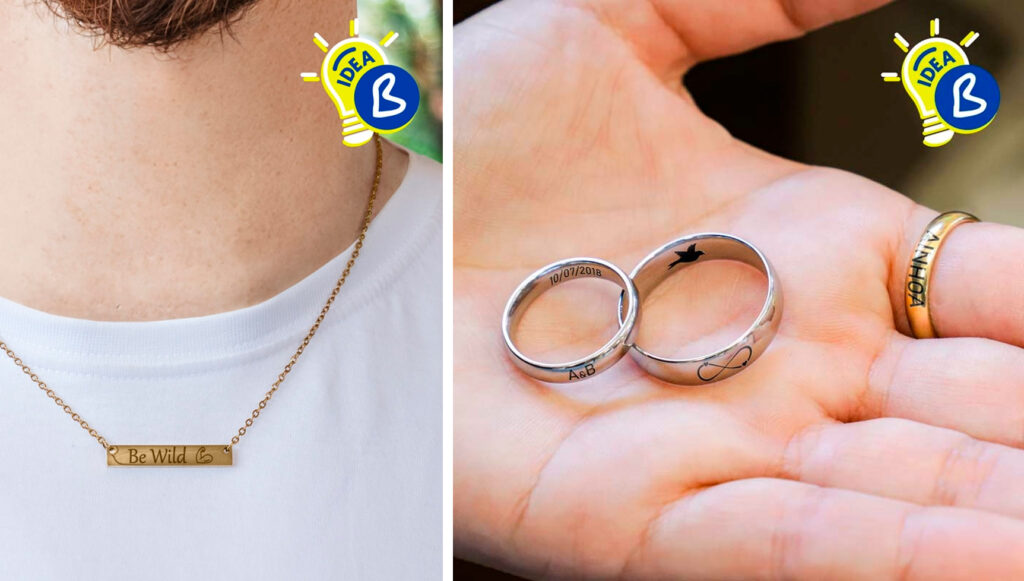
- Engraving on treated or coated metals
- Marking on technical plastics
- Customisation of small parts with a high level of detail
What type of products can you make:
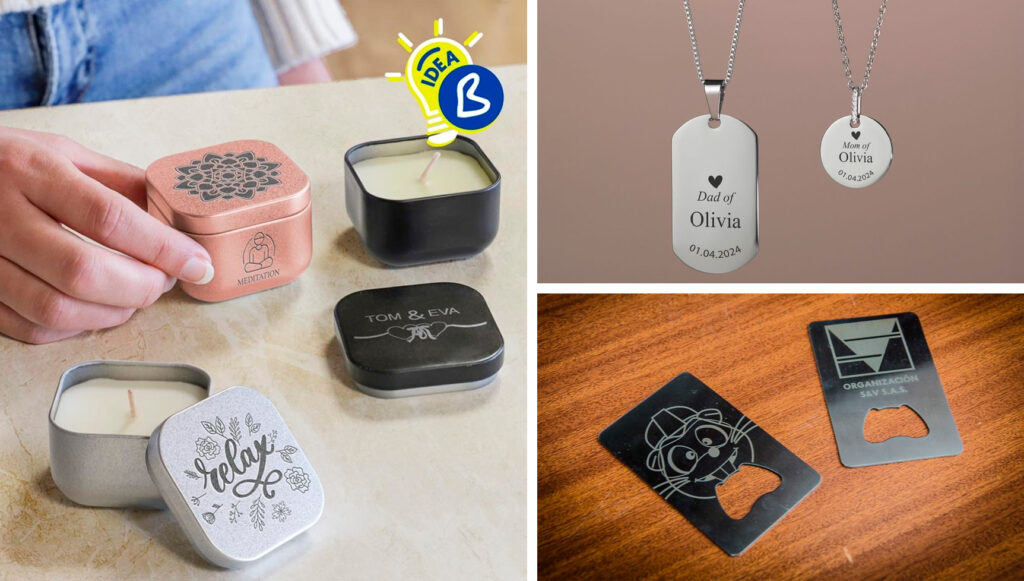
- Personalised jewellery and accessories
- Keyrings and metal plates
- Identification plates
- Promotional gadgets
- Technical or industrial components
✅ Advantages
- High precision in small details
- Better performance on plastics
- Clean marking on treated metals
- Low thermal impact
- Compact format
❌ Limitations
- It is not a cutting laser.
- He does not work with raw metal.
- More specific application
👉 If you work with small pieces or sensitive materials and require detail without complications, the IR laser is your best ally.
FIBRE LASER: essential if you work with metal
The fibre laser is specifically designed for direct marking and engraving on metal. Unlike other types of lasers, it is not a versatile technology, but it is essential if your business focuses on this type of material.
Compared to the infrared (IR) laser, the fibre laser offers greater power and allows direct work on metals without the need for prior treatments, achieving faster, deeper, and more durable markings.
What can you engrave with a fibre laser?
- Stainless steel
- Aluminium
- Brass and other metals
Commonly used in:
- Identification plates and signage
- Custom tools
- Metal keychains and promotional items
- Industrial marking (codes, serial numbers, logos)
✅ Advantages
- Specialised in metal
- High working speed
- Great precision and definition
- Permanent and resistant marking
- Low maintenance
- High productivity
❌ Things to keep in mind
- It is not versatile.
- It is not a cutting laser (in regular use)
- Greater initial investment
👉 If your business revolves around metal and you seek speed, precision, and permanent results, a fibre laser is essential.
The UV laser is one of the most unique types of lasers within laser machines, as it operates differently from the others.
Most technologies (diode, CO₂, or fibre) work by applying heat to the material. This heat burns, melts, or vaporises the surface to create the engraving or cut. Therefore, depending on the material, effects such as burnt edges, deformations, or colour changes may occur.
👉 It does not rely on heat but rather on a surface reaction of the material, which allows marking without damaging it.
What you can do with a UV laser
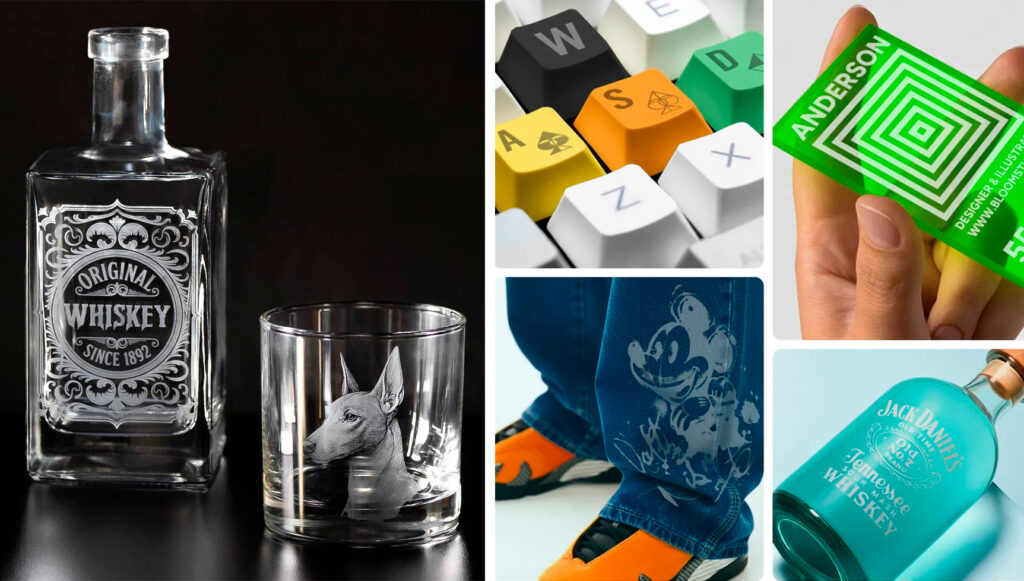
- Engraving transparent materials with better results
- Working with plastics without deforming them
- Mark delicate or coated surfaces
- Achieve extremely fine details
- Engrave without the "burnt effect"
When does it make sense to choose a UV laser?
- Clean finish (without burn marks)
- High precision in small details
- I work with plastics or sensitive materials.
- A result that is more "premium" than technical
✅ Advantages
- Cold marking
- Maximum precision and detail
- Excellent on delicate materials
- Better results on transparent materials
- Professional finish
❌ Limitations
- It is not specifically designed for cutting.
- Very specific use
👉 If the finish is the most important aspect and you work with delicate materials, UV laser is the most precise option.
Materials according to laser type
To choose a type of laser, we must consider the materials we want to engrave and cut.
If a laser can cut certain materials, it can also engrave them, but if it engraves certain materials, it does not necessarily mean it can cut them. Cutting requires much more power than engraving. For more information, you can refer to this post: "Which Laser Machine Should I Buy"
| DIODE (ENGRAVING/CUTTING) | CO2 (ENGRAVING/CUTTING) | GO (ENGRAVING/CUTTING) | FIBRE (ENGRAVING/CUTTING) | UV (ENGRAVING/CUTTING) | |
| Wood | ✔ / ✔ | ✔ / ✔ | ✘ / ✘ | ✔ / ✔ | ✔ / ✔ |
| MDF | ✔ / ✔ | ✔ / ✔ | ✘ / ✘ | ✔ / ✔ | ✔ / ✔ |
| Opaque acrylic | ✔ / ⚠️(marked) | ✔ / ✔ | ✔ / ✘ | ✔ / ✘ | ✔ / ✔ |
| Clear acrylic | ✘ / ✘ | ✔ / ✔ | ✘ / ✘ | ✘ / ✘ | ✔ / ✔ |
| Stainless steel |
More information about the Sublimable Satin Neck Pillowcase and Filling
11 m LED light garland with 500 bulbs, ideal for party and celebration decorations. 20m LED light garland with 600 bulbs. 30m LED light garland.
✘ | ⚠️(with spray) / ✘ | ✔ / ✘ | ✔ / ✔ | ✔ / ✘ |
| Chalkboard | ✔ / ✘ | ✔ / ✘ | ✘ / ✘ | ✔ / ✘ | ✔ / ✘ |
| Denim | ✔ / ✘ | ✔ / ✔ | ✔ / ✘ | ✔ / ✔ | ✔ / ✘ |
| Faux Leather | ✔ / ✔ | ✔ / ✔ | ✔ / ✘ | ✔ / ✔ | ✔ / ✔ |
| Glass | ✘ / ✘ | ✔ / ✘ | ✘ / ✘ | ✔ / ✔ | ✔ / ✔ |
| Cardboard | ✔ / ✔ | ✔ / ✔ | ✘ / ✘ | ✔ / ✔ | ✔ / ✔ |
| Paper | ✔ / ✔ | ✔ / ✔ | ✔ / ✘ | ✔ / ✔ | ✔ / ✔ |
| Cardstock | ✔ / ✔ | ✔ / ✔ | ✔ / ✘ | ✔ / ✔ | ✔ / ✔ |
❓ FAQs about types of lasers
- What type of laser is best to start with?
- If you want to try or start with a small investment → diode laser
- If you want to start a business from scratch → CO₂ laser
- Which laser is suitable for working with transparent acrylic?
- The CO₂ laser is the best option for cutting and engraving clear acrylic with a good finish.
- The UV laser can also engrave it with great precision, but it is not a cutting machine.
What laser do I need to engrave metal?
The only one that professionally works with metal is the fibre laser.
- IR → valid on treated metals
- UV → surface engraving
- CO₂ or diode → not recommended
Can it be cut with any laser?
No. Only the CO₂ laser (and to a lesser extent the diode) is designed for cutting in customisation.
- Fibre → does not cut (in this context)
- GO → does not cut
- UV → not designed for cutting
- Which laser is best for small or detailed products?
- IR → very good option for small pieces
- UV → superior finish and maximum precision
- What laser do I need to work with glass or crystal?
- CO₂ → sandblasting type engraving
- UV → better control, more precision, and reduced risk of breakage
- Which laser is more cost-effective for a business?
- Extensive catalogue → CO₂
- Metal niche → Fibre
- Premium products → UV
🔥 Conclusion: which laser to choose without making a mistake
Choosing between the different types of lasers is not about finding the most powerful machine, but about understanding what you need to produce and with which materials you will be working. Each technology is designed for a specific use and directly determines both the type of products you can offer and the quality of the final finish.
Before deciding, it is crucial to have a clear focus: working with wood and acrylic is not the same as focusing on metal or delicate products where the finish makes a difference. Choosing an inappropriate laser can limit your range from the start or force you to change equipment prematurely.
In summary, the best decision is not to choose the most comprehensive machine, but the one that best fits your business. If you clearly define what you want to sell, it will be much easier to select the right laser machine from the start.
If you have any questions, share them with us in the comments. Our team will be delighted to provide you with answers and assistance. You can also directly contact our Customer Service department for further help.
Remember that on our social media, we daily share a wide range of ideas, offers, and the latest updates related to various personalisation techniques. To stay informed about everything, follow us on Instagram and TikTok. And don't forget to subscribe to our YouTube channel to continue learning with us!
See you in the next post!
You're welcome!
👇 Other articles that may be of interest to you:
🚀 Sublimation Paper: The Ultimate Guide for Professionals
🤔 xTool vs. AtomStack: which is better if you're just starting out?
🙋♂️How to store DTF prints and maximize their durability

🏞️Express personalisation on the Camino de Santiago: what to sell and how to do it in minutes
WE WANT TO KNOW WHAT YOU THINK
You may also like