


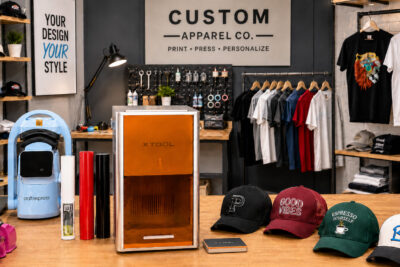
⚡ Screen printing with laser machines: when the technique evolves
⚡ Screen printing with laser machines: when the technique evolves
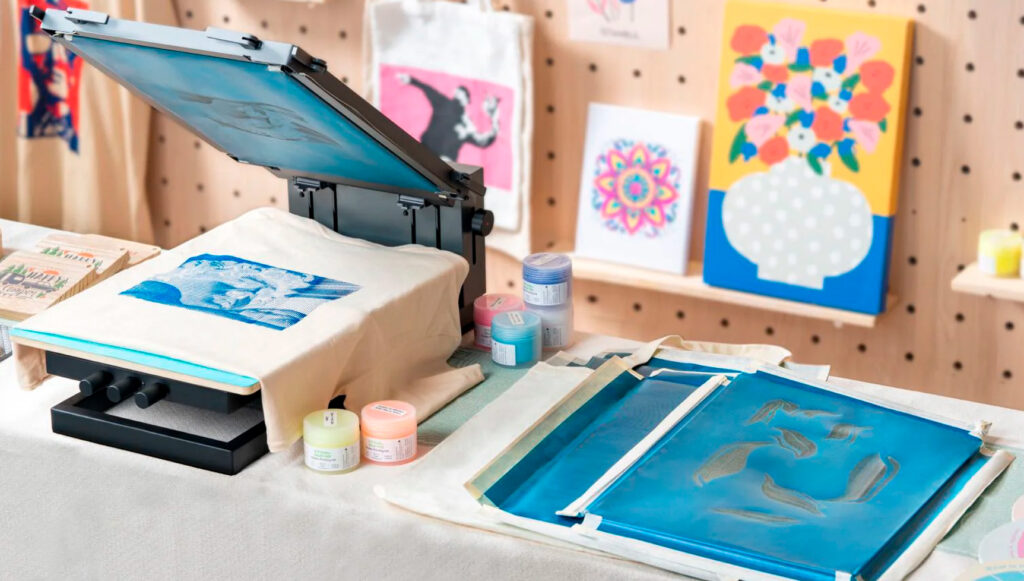
In the midst of the expansion of DTF and other digital techniques, screen printing remains one of the most reliable options for printing T-shirts, especially in repetitive one-colour productions. It is a stable, predictable, and highly efficient technique when the volume begins to increase and the cost per unit becomes crucial.
Traditionally, screen preparation required several technical steps that were part of the usual workshop process. Today, it is possible to simplify this phase by using laser machines to engrave the screens directly, reducing preparation times while maintaining the quality and consistency inherent to professional screen printing.
We explain how this system works and what you need to apply it in your workshop.
ÍNDICE
- The key: Directly engrave the screen with a laser
- Assembly and tensioning: stability from the first use
- Design preparation: adjustments before recording
- From engraving to textile production
- Cost per unit: how volume influences it
- How does it compare to DTF?
- Does it make sense to incorporate laser screen printing in your workshop?
The key: Directly engrave the screen with a laser
The key change is on the screen.
The Basic xTool Laser Screen Printing Kit includes pre-treated meshes ready for laser engraving, so no emulsion or exposure unit is needed. The design is defined directly with a laser, eliminating the traditional chemical process.
You can work with:
- Stainless steel meshes coated with dark polymer, suitable for diode or CO₂ lasers and offering greater durability than traditional ones.
- Dark polyester meshes, compatible with diode or fibre laser.
Additionally, they are available in different thread counts (100 threads for more open designs and 200 threads for greater detail), allowing the screen to be adapted to the type of work.
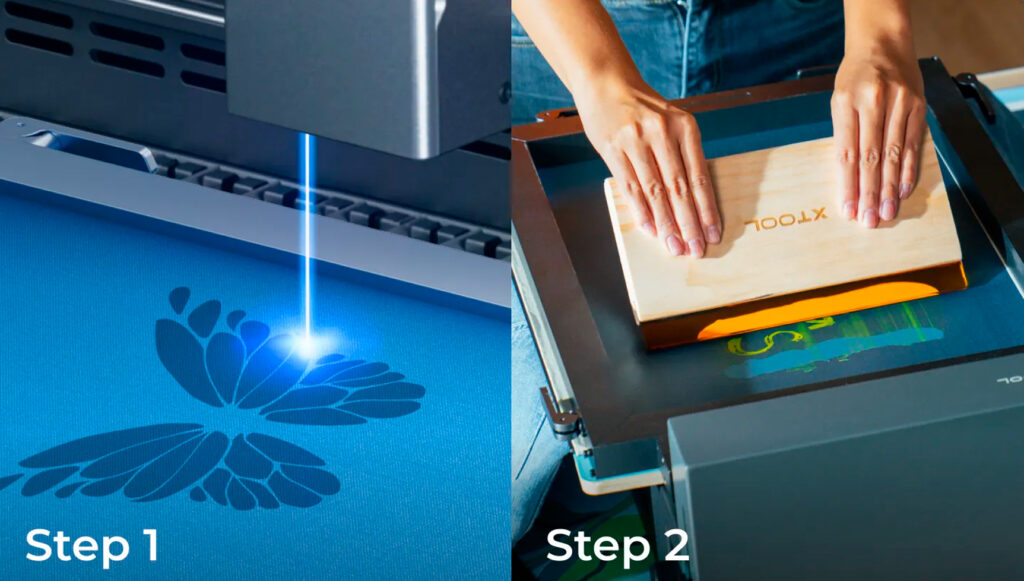
Instead of being exposed with UV light, the design is laser-engraved in a controlled, precise, and repeatable manner.
Assembly and tensioning: stability from the first use
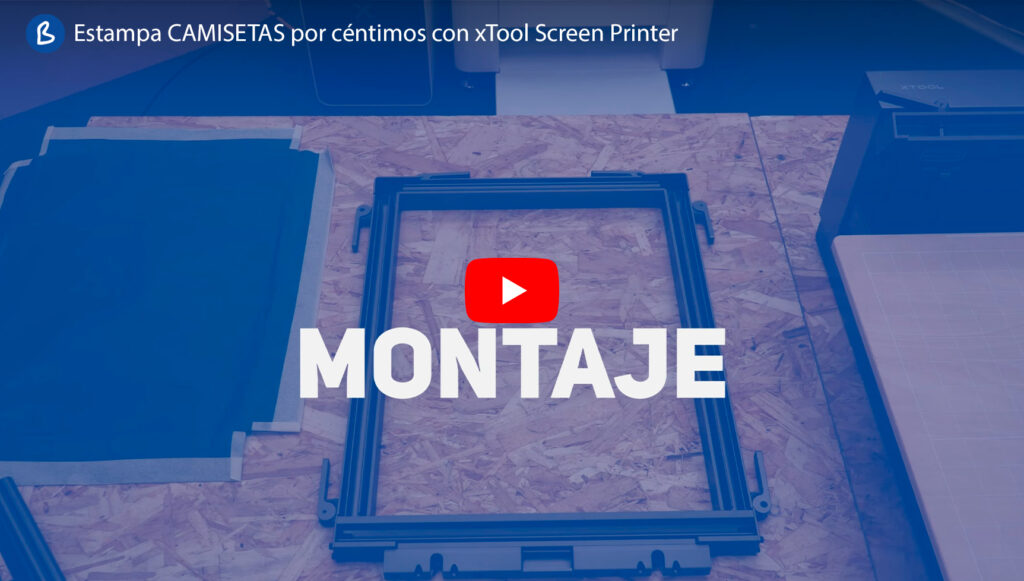
The included metal frame allows you to mount and tension the mesh using a system of side levers. The process is quick and does not require complex tools.
Correct tensioning is essential in screen printing. It maintains the design's definition, ensures even pressure when using the squeegee, and allows the ink to pass through the mesh in a controlled manner.
In repetitive productions, this point is crucial: it ensures stability, consistency, and uniform results in each unit.
Design preparation: adjustments before recording
From the software of your xTool laser machine, you must select the screen preparation mode.
Key recommendations:
👉 Image file format.👉 Activate mirror mode.👉 Adjust size and position.👉 Accurately measure the distance of the print head.
The parameters may vary depending on the model, power, and design. We always recommend conducting tests before launching a full production.
From engraving to textile production
Once the screen is exposed and cleaned, the printing phase begins.
The process is the classic screen printing:
👉 Place the garment on the base and secure it properly.👉 Pour the ink on the top.👉 Make a gentle pass to load the screen.👉 Apply even pressure with the squeegee to transfer the design.
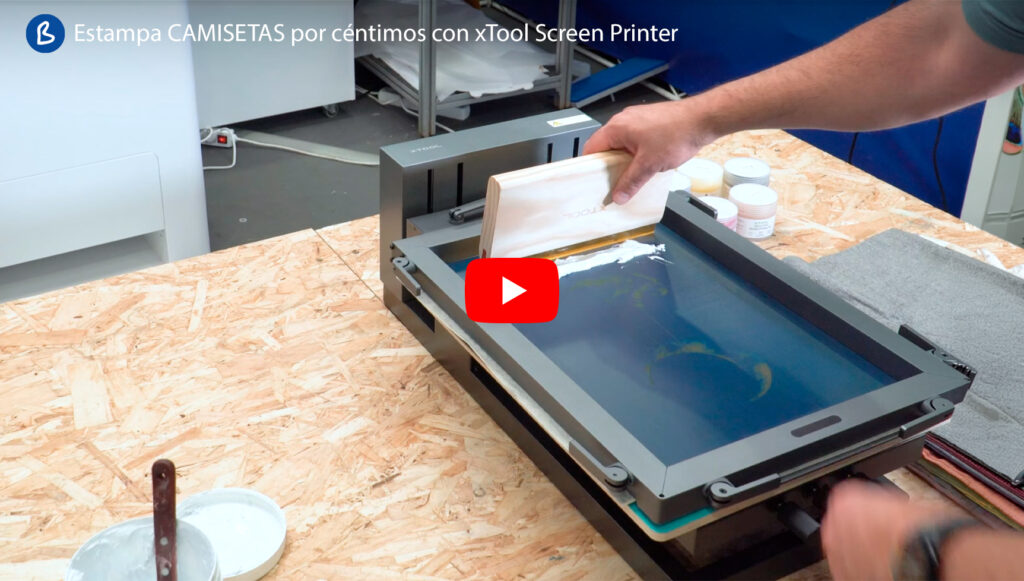
The key is to consistently repeat the gesture to maintain uniformity throughout the entire run.
After printing, the ink must be cured on a heat press at 160 ºC for 90 seconds to ensure fixation and durability.
Cost per unit: how volume influences it
In screen printing, the volume makes the difference.
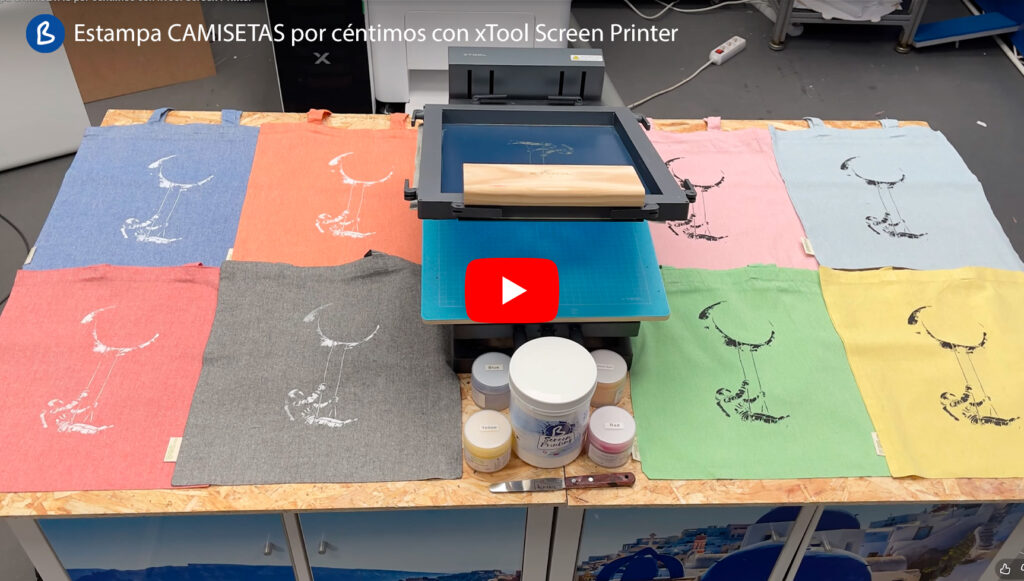
The investment in screen and ink is minimal compared to the number of units that can be produced with each setup. As the print run increases, the cost per unit significantly decreases, making this technique particularly appealing for repetitive productions.
Therefore, in repetitive single-colour productions, screen printing becomes one of the most cost-effective techniques in the workshop. Additionally, the system allows for working with multiple colours by using separate screens for each one, in a simple and scalable manner.
How does it compare to DTF?
Many workshops combine techniques depending on the type of order.
If you produce complex or full-colour designs on demand, DTF might be the most flexible solution.
However, in repetitive single-colour runs, laser screen printing allows for cost reduction per unit while maintaining highly valued classic finishes in textiles.
It is not about choosing one technique and discarding the other. It is about optimising each order according to volume, design, and margin.
Does it make sense to incorporate laser screen printing in your workshop?
Screen printing has not become obsolete. It has adapted to the digital environment.
The possibility of engraving screens with a laser allows for the simplification of the traditional process and the maintenance of attractive margins in repetitive productions.
👉 If you already work with lasers and want to expand your possibilities in textile printing, the Basic xTool Laser Screen Printing Kit is a professional solution that fits perfectly in a modern workshop.
If you have any questions, share them with us in the comments. Our team will be delighted to provide you with answers and assistance. You can also contact our Customer Service department directly for additional help.
Remember that on our social media channels, we post a wide range of ideas, offers, and the latest news related to various personalisation techniques daily. To stay updated on everything, follow us on Instagram and TikTok. And don't forget to subscribe to our YouTube channel to continue learning with us!
👇 Other articles that may be of interest to you:
✂️ Laser cutting of textile vinyl: create customised caps with a 3D effect
🔥 Personalise thermoses with laser engraving: an opportunity for your catalogue
🚀 xTool M2: full-colour printing, engraving, and laser cutting in a single machine
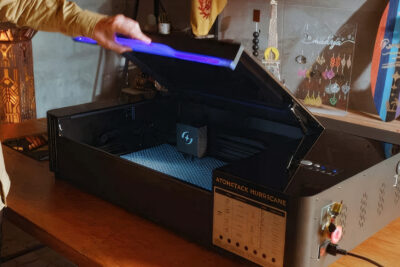
🌪️ Atomstack Hurricane: Is it the new CO₂ laser that changes everything?
WE WANT TO KNOW WHAT YOU THINK
You may also like